Picture this: You’re anxiously waiting for urgent news from the hospital about a loved one, your phone buzzes, and you rush to check WhatsApp, only to find a glaring “BUY 1 GET 1 FREE OFFER WITH FREE SHIPPING!!!” staring back at you.
Obviously, in that state of mind, you’re bargain hunting, right? WRONG. You’re only waiting for one thing, and anything that distracts you for no reason is frustrating and annoying.
That’s exactly what happened to me recently when I got an unsolicited sales message on WhatsApp from a brand whose products I actually admire. I picked up my phone expecting a message from family or friends, but instead, it was a pushy discount code invading my personal space. It left me feeling violated and frustrated, prompting me to delete it, report as spam, and block them instantly.
WhatsApp is meant for meaningful connections with loved ones and communities, not for brands to bombard us with sales pitches. This belongs in email, where I can engage on my own terms.
In this article, I’ll explore why unsolicited WhatsApp Spam marketing feels so invasive, draw parallels to Bluetooth’s failed push era in the early 2000s, and offer practical solutions for users and brands to navigate this without repeating history’s mistakes.
The real issue here is that unsolicited push messaging turns personal platforms into spam havens, eroding user trust and inviting backlash, just like Bluetooth proximity marketing did two decades ago.
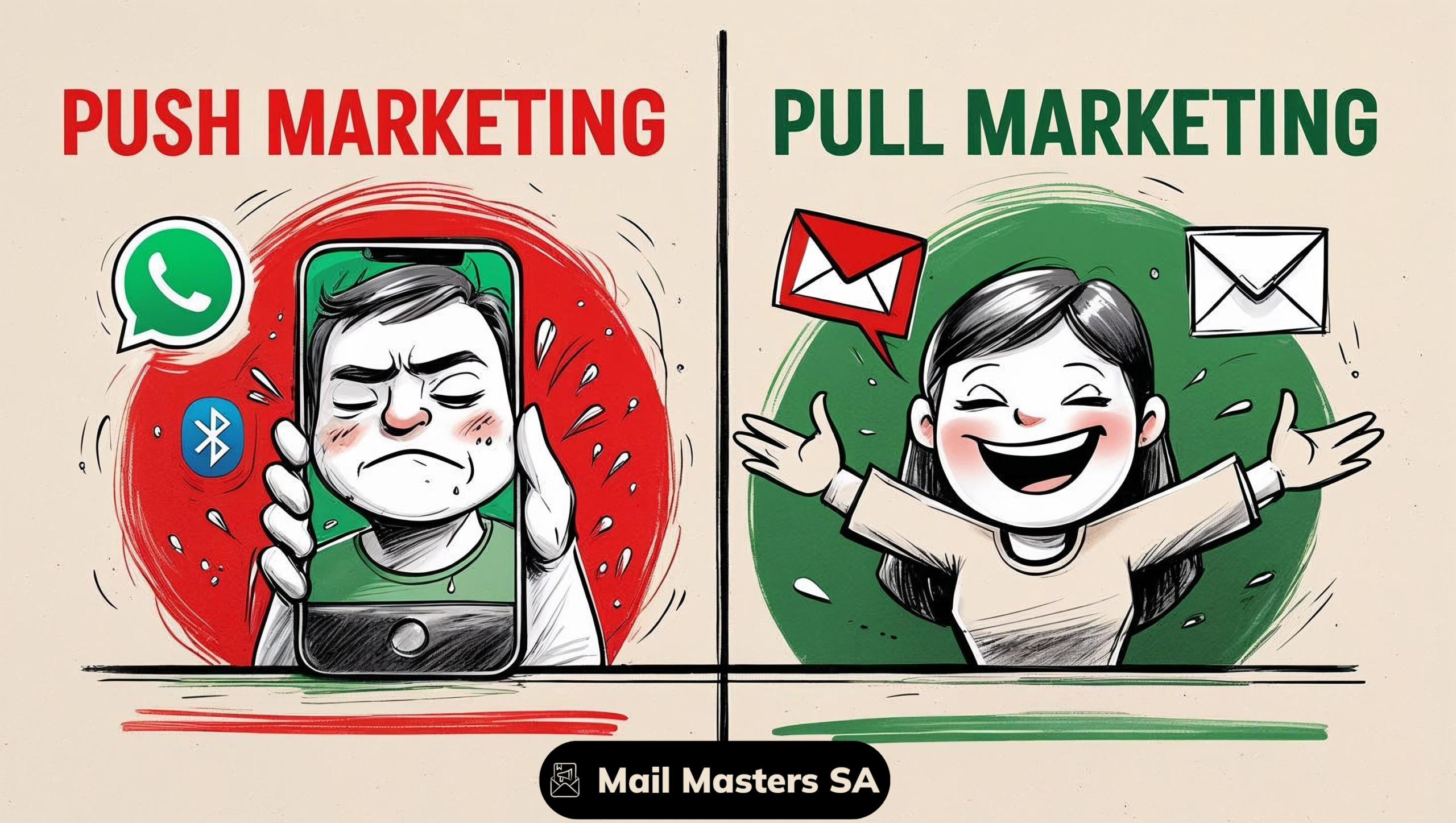
Push marketing involves proactively shoving promotions at users without their initiative, like unsolicited WhatsApp messages or Bluetooth ads, which interrupt and invade privacy.
In contrast, pull marketing lets users seek out information on their terms, such as subscribing to emails or browsing websites, fostering engagement without frustration and making email a reliable choice for thoughtful communication.
For instance, in the early 2000s, “bluejacking” allowed brands to flood nearby phones with ads via Bluetooth, a classic push tactic, leading to widespread annoyance and privacy complaints. This isn’t just annoying; it’s a direct invasion of privacy and can damage brands irreparably, as users block and report en masse, unlike pull methods that build loyalty through consent.
Bluetooth proximity marketing, often called “bluecasting” or “bluejacking,” started as an innovative way to send ads to nearby phones but quickly fizzled due to its intrusive nature.
Here’s a high-level overview:
- Late 1990s-Early 2000s: Introduction – Bluetooth tech emerged around 1999-2000 for simple data sharing between devices, not originally for ads.
- 2003-2004: Rise of Bluejacking – It began as a fun gimmick but turned into business promotions, like coupons sent in public spaces across Europe and Asia, exciting at first, but without user permission.
- 2005-2007: Peak and Backlash – Retailers set up kiosks in malls and events to blast ringtones and deals; seen as cutting-edge for local targeting, but users hated the spam.
- Mid-2000s Decline (2007-2008 Onward) – It faded fast because of user frustration (people turned off Bluetooth visibility), tech updates (phones defaulted to hidden modes), new privacy laws requiring consent and shifts to better alternatives like smartphone apps and opt-in beacons.
From what I’ve seen in recent trends and user complaints, many professionals feel the same about WhatsApp: it’s becoming “unusable” with daily spam from businesses. In January and February 2025, WhatsApp banned over 19.6 million accounts in India for spam and misuse, including a record 9.9 million in January and 9.7 million in February.m.economictimes.com+2 more Scams like fake jobs, call forwarding, and stock pump-and-dumps are rampant, with global losses in millions.
So, how can we solve or avoid this problem before WhatsApp follows Bluetooth’s fate?
Here’s our step-by-step advice for users, brands, and platforms, emphasizing the shift from invasive push to respectful pull marketing:
- For Users: Reclaim Your Privacy Controls – Immediately report and block spammers in WhatsApp (long-press message > Report). Adjust settings to silence unknown callers and limit group adds. If spam persists, switch to privacy-focused apps like Signal. This works because collective reporting pressures platforms; WhatsApp’s AI already detects and bans millions monthly, like the figures from early 2025. Pro tip: Use tools like Avast or built-in features to identify scams early.
- For Brands: Embrace Consent-Driven Marketing – Always secure explicit opt-in before messaging, via website forms or SMS prompts compliant with GDPR’s granular consent rules. Shift from push tactics to pull strategies like value-first emails or opt-in WhatsApp catalogs, where users pull information when ready, instead of bulk pushes. For example, use personalized alerts only after permission, avoiding restricted goods like gambling or loans per WhatsApp’s policy. This boosts engagement and positions email as a trusted, non-intrusive channel.
- For Platforms and Regulators: Enforce Stricter Safeguards – WhatsApp should mandate a “Promotions” tab and AI filters for unsolicited messages, building on 2025’s per-user limits and template approvals. Governments could expand laws like India’s DND registry to messaging apps. Include age gates (no marketing to under-18s) and geographic restrictions.
Bonus: Everyone, advocate for transparency; brands should provide easy opt-outs, and users demand better data practices. This approach not only prevents backlash but also fosters trust, turning potential spam into meaningful engagement by favoring pull over push.
In summary, unsolicited WhatsApp sales messages are echoing Bluetooth’s invasive pitfalls, fueling massive bans, scams, and regulatory crackdowns in 2025, highlighting the dangers of push marketing versus the respect of pull strategies. By prioritizing consent and privacy, we can preserve personal spaces and build sustainable marketing.
What about you? Have you dealt with WhatsApp spam that ruined your trust in a brand, like bluejacking did back in the day?
Share your thoughts in the comments; I’d love to hear your stories or alternatives. If this resonated, connect with me for more on ethical digital marketing.
Let’s discuss!
#WhatsAppSpam
#MarketingEthics
#DigitalPrivacy
#MailMastersSA
#EmailMarketing
#SmallBusinessMarketing